

Material Handling Equipment
- 17-Jun-2026
The Right Material Handling Equipment Can Reduce Cost and Improve Warehouse Efficiency
In every warehouse, factory, logistics center, retail storage area or industrial facility, movement of goods is a daily activity. Products need to be unloaded, stored, shifted, stacked, picked, packed and dispatched. When this movement is not managed properly, it can lead to delays, product damage, safety risks and higher operating costs.
Material handling equipment plays a major role in solving these challenges. It helps businesses move goods faster, safer and more efficiently. Whether the operation is small or large, choosing the right equipment can improve productivity, reduce manual effort and create a more organized workplace.
Many companies focus on storage space, manpower and transport, but they often overlook the equipment used inside the facility. In reality, the right material handling solution can directly impact cost, speed, employee safety and customer satisfaction.
What Is Material Handling Equipment?
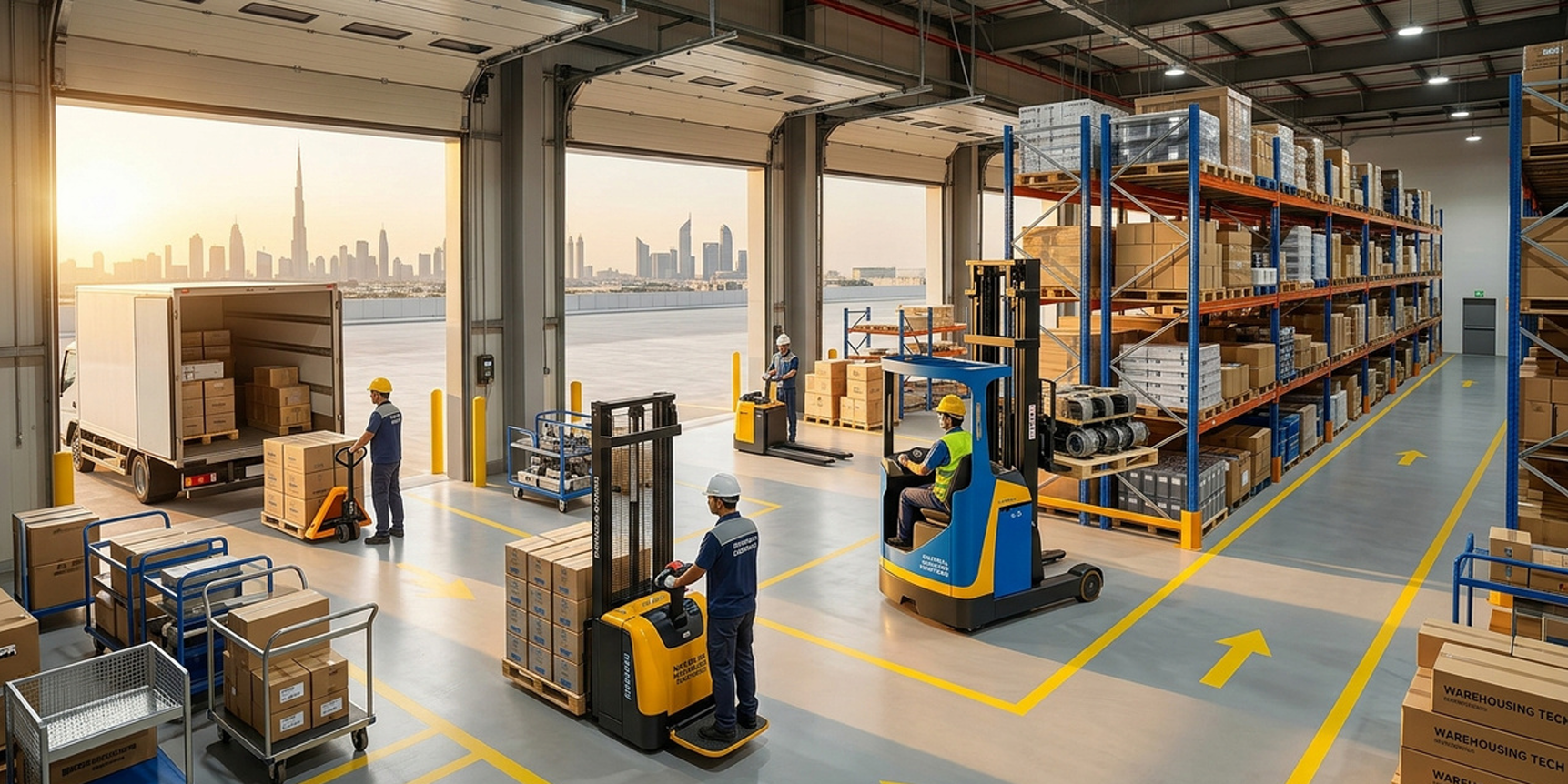
Material handling equipment refers to tools, machines and systems used to move, lift, store, control and protect goods within a facility. It includes simple equipment such as hand pallet trucks and trolleys, as well as advanced machines such as forklifts, reach trucks, stackers, conveyors and automated storage systems.
The main purpose is to reduce manual handling and improve the flow of materials. When goods move smoothly from receiving to storage and dispatch, the entire operation becomes more efficient.
Material handling equipment is used in many industries, including automotive, construction, manufacturing, retail, logistics, food and beverage, pharmaceuticals, spare parts, e-commerce and heavy equipment businesses.
Why Material Handling Matters
Poor material handling can create many problems. Workers may spend too much time moving goods manually. Products may get damaged during shifting. Forklifts may block pathways due to poor planning. Storage space may not be used properly. Orders may be delayed because items are difficult to access.
These issues increase cost and reduce productivity.
Good material handling improves movement, safety and storage. It ensures that the right product reaches the right place at the right time with minimum effort and damage.
For businesses that handle high inventory or heavy goods, this can make a major difference to daily operations.
1. Reduces Manual Labour
One of the biggest benefits of material handling equipment is reduced manual effort. Lifting, pushing, pulling and carrying heavy goods manually can be tiring and unsafe. It also slows down work.
Equipment such as pallet trucks, stackers and forklifts allow workers to move heavy items with less physical strain. This improves productivity and reduces the risk of workplace injuries.
When employees are not exhausted by manual handling, they can focus better on accuracy, quality and speed.
2. Improves Warehouse Productivity
In a warehouse, time is money. Every extra minute spent searching, lifting or moving goods affects efficiency. The right equipment helps speed up daily tasks.
For example, a forklift can move multiple pallets at once. A reach truck can place goods at higher levels. A conveyor system can move items continuously across a facility. A pallet truck can quickly shift goods over short distances.
When equipment is matched to the operation, workers can complete more tasks in less time. This improves overall output and supports faster order fulfillment.
3. Better Use of Storage Space
Warehouse space is expensive. If goods are not stored properly, valuable space is wasted. Material handling equipment helps businesses use vertical and horizontal space more effectively.
Reach trucks and stackers allow goods to be stored at greater heights. Racking systems help organize inventory neatly. Forklifts and narrow-aisle equipment allow better access in compact areas.
By using storage space efficiently, companies can avoid unnecessary expansion or rental costs. They can store more products in the same area without creating clutter.
4. Reduces Product Damage
Product damage is a hidden cost in many operations. Items may be dropped, scratched, crushed or mishandled during movement. This leads to replacement cost, customer complaints and delays.
Proper material handling equipment reduces the chances of damage. Palletized goods can be moved safely with forklifts or pallet trucks. Fragile items can be transported using suitable trolleys or containers. Heavy materials can be lifted with the correct capacity equipment.
When goods are handled correctly, quality is protected from receiving to dispatch.
5. Improves Workplace Safety
Manual lifting and poor equipment use can cause injuries. Back strain, slips, falls, crushed fingers and collisions are common risks in poorly managed facilities.
Material handling equipment improves safety when used correctly. It reduces direct physical lifting and allows workers to move goods in a controlled manner. Machines with proper brakes, load limits, warning lights and safety systems help create a safer work environment.
However, equipment alone is not enough. Operators must be trained, pathways must be clear and regular maintenance must be carried out.
A safe warehouse reduces downtime, compensation claims and employee stress.
6. Supports Faster Loading and Unloading
Loading and unloading are critical points in any supply chain. Delays at the receiving or dispatch area can affect the entire business.
Forklifts, dock levelers, pallet trucks and loading equipment help speed up this process. Goods can be moved quickly from trucks to storage areas and from picking zones to dispatch vehicles.
This is especially important for businesses with high daily movement, such as logistics companies, retail distributors, spare parts warehouses and manufacturing units.
Faster loading and unloading also improves vehicle turnaround time.
7. Helps Standardize Operations
When a company uses proper material handling equipment, processes become more structured. Goods are moved in a standard way. Storage locations are better defined. Safety practices become easier to follow.
Standardization helps reduce confusion and mistakes. New employees can be trained faster because the process is clear. Supervisors can monitor work more effectively.
This is especially useful for businesses managing multiple warehouses or branches.
8. Reduces Operating Cost
Material handling equipment can reduce cost in several ways. It reduces manpower dependency, product damage, injury risk, time wastage and space inefficiency.
Although equipment requires investment, the long-term savings can be significant. A single forklift or stacker can perform work that would otherwise require multiple workers and more time.
For businesses with regular goods movement, the return on investment can be strong. The key is choosing equipment that matches the actual workload and environment.
9. Improves Inventory Control
Efficient material handling supports better inventory control. When goods are properly moved and stored, it becomes easier to track stock. Items are less likely to be misplaced or damaged.
This improves stock accuracy and reduces delays during order picking. In organized warehouses, employees spend less time searching for items and more time fulfilling orders.
For industries such as automotive parts, machinery spares and retail distribution, accurate inventory movement is very important.
10. Supports Business Growth
As businesses grow, manual handling becomes difficult to manage. Higher stock volume, faster dispatch needs and larger product ranges require better systems.
Material handling equipment helps companies scale operations without losing control. With the right equipment, a warehouse can manage higher volume, faster movement and better storage.
This supports business expansion and improves customer service.
Common Types of Material Handling Equipment
Different operations require different equipment. Some of the most commonly used options include:
Hand Pallet Trucks: Suitable for moving pallets over short distances. They are simple, cost-effective and useful in warehouses, retail stores and workshops.
Electric Pallet Trucks: Useful for faster movement with less manual effort. They are suitable for larger warehouses and frequent pallet movement.
Stackers: Used to lift pallets to low or medium heights. They are useful where forklifts may not be required or where space is limited.
Forklifts: One of the most widely used machines for lifting and moving heavy loads. They are suitable for warehouses, factories, yards and logistics operations.
Reach Trucks: Designed for high racking and narrow aisles. They help improve vertical storage.
Trolleys and Carts: Useful for moving smaller items, tools, boxes and components.
Conveyors: Suitable for continuous movement of goods in production lines, packing areas and distribution centers.
Racking Systems: Essential for organized storage and better space usage.
How to Choose the Right Equipment
Choosing the right material handling equipment depends on several factors. Businesses should consider the type of goods, load weight, movement distance, storage height, floor condition, aisle width, daily usage and operator skill level.
For example, a small spare parts store may only need pallet trucks and shelves. A large warehouse may require forklifts, reach trucks and racking systems. A production facility may benefit from conveyors and trolleys.
It is also important to consider maintenance support, spare parts availability and safety features. Buying equipment without after-sales support can create problems later.
Training and Maintenance Are Important
Even the best equipment can become unsafe if operators are not trained. Employees must know how to use the equipment, understand load limits and follow safety rules.
Regular maintenance is also essential. Brakes, tires, hydraulics, batteries, forks and controls should be checked regularly. Preventive maintenance reduces breakdowns and extends equipment life.
For electric equipment, battery care is especially important. Proper charging and handling improve performance and reduce downtime.
Final Thoughts
Material handling equipment is a key part of efficient warehouse and industrial operations. It helps reduce manual effort, improve productivity, protect goods, increase safety and reduce operating costs.
The right equipment can transform a slow and disorganized facility into a smoother, safer and more professional operation. Whether it is a simple pallet truck or a complete forklift and racking solution, every business should choose equipment based on real operational needs.
In today’s competitive market, efficiency matters. Customers expect faster delivery, better quality and reliable service. With the right material handling equipment, businesses can meet these expectations while improving internal productivity and cost control.

100% Customer Satisfaction

Genuine Accessories

Quality Service
