

Garage Equipment & Tools
- 17-Jun-2026
Essential Garage Tools Every Workshop Needs for Faster and Safer Service
A professional workshop is not judged only by the vehicles it repairs. It is also judged by how efficiently, safely and neatly the work is carried out. Whether it is a small independent garage, a dealership service center, a fleet maintenance workshop or a large automotive repair facility, the right garage equipment and tools can make a major difference.
Customers today expect faster service, accurate diagnosis, clean workmanship and reliable repairs. Workshop technicians also need tools that help them work safely and confidently. Without the right equipment, even simple jobs can take longer, create safety risks and affect service quality.
Garage equipment is not just an expense. It is an investment in productivity, safety, customer satisfaction and long-term business growth. A well-equipped workshop can handle more jobs, reduce delays, improve technician efficiency and build stronger customer trust.
Why Garage Equipment Matters
Every repair job depends on the right tool. If technicians do not have proper tools, they may use unsafe shortcuts or spend extra time completing basic tasks. This can lead to damaged parts, poor repair quality or accidents.
For example, lifting a vehicle without a proper lift can be dangerous. Removing tires without the right tools can damage wheel nuts or rims. Diagnosing electrical faults without proper equipment can waste hours. Even simple maintenance jobs such as oil changes, brake service and tire replacement become easier and safer with the right setup.
Good tools help workshops maintain consistency. They allow technicians to follow correct procedures and deliver better service quality across different vehicle types.
1. Vehicle Lifts
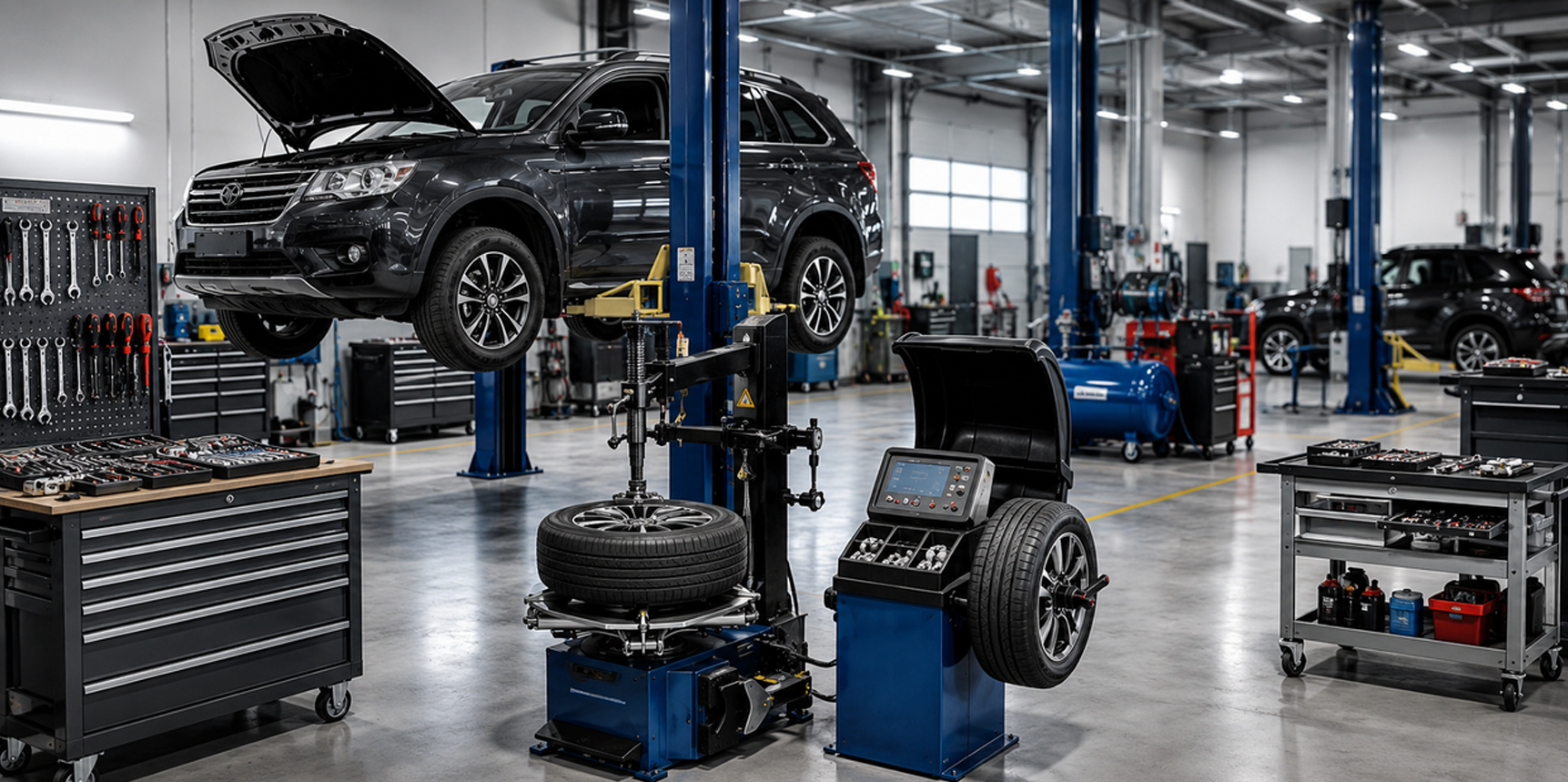
A vehicle lift is one of the most important pieces of equipment in any workshop. It allows technicians to raise the vehicle safely and access the underbody, suspension, brakes, exhaust system and drivetrain components.
There are different types of vehicle lifts, including two-post lifts, four-post lifts, scissor lifts and heavy-duty lifts. The right type depends on the workshop’s space, vehicle category and type of service offered.
Two-post lifts are commonly used for general repair and maintenance. Four-post lifts are useful for alignment, inspection and larger vehicles. Scissor lifts are suitable for quick service areas and workshops with space limitations.
A good lift improves technician comfort, reduces physical strain and makes repair work faster. Most importantly, it creates a safer working environment.
2. Air Compressors
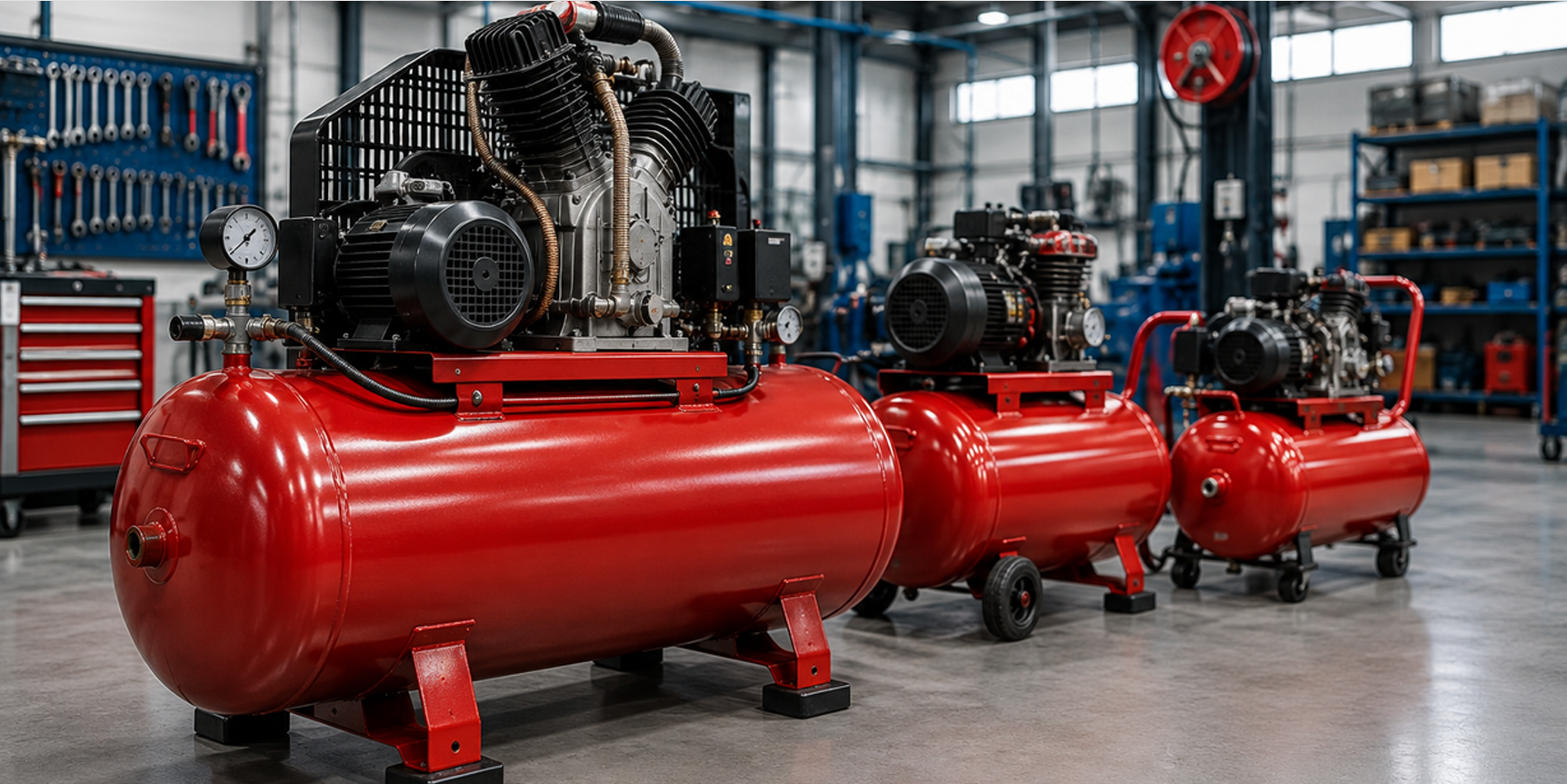
Many garage tools depend on compressed air. Air compressors power pneumatic tools such as impact wrenches, air ratchets, spray guns, blow guns and tire inflators. They are useful for tire shops, body shops, general repair workshops and industrial service centers.
Choosing the right air compressor depends on the number of tools being used, air pressure requirement, tank size and daily workload. A small compressor may be suitable for light use, while a busy workshop requires a larger and more reliable unit.
A good compressor improves speed and efficiency. It allows technicians to remove bolts, inflate tires, clean parts and operate tools with less manual effort.
Regular maintenance of the compressor is also important to ensure consistent performance and long life.
3. Tire Changer
Tire replacement is one of the most common workshop services. A tire changer helps remove and install tires safely without damaging the rim or tire bead.
Modern vehicles often come with alloy wheels, low-profile tires and larger rim sizes. These require careful handling. Using outdated or poor-quality equipment can damage wheels and create customer complaints.
A good tire changer reduces manual effort and improves service speed. For workshops that handle SUVs, performance vehicles or commercial vehicles, choosing a tire changer with the right capacity is important.
This equipment is especially valuable for tire shops, quick service centers and dealerships.
4. Wheel Balancer
After fitting a tire, wheel balancing is necessary to ensure smooth driving. An unbalanced wheel can cause vibration, uneven tire wear and discomfort at higher speeds.
A wheel balancer identifies weight differences in the tire and wheel assembly. The technician then adds balancing weights to correct the imbalance.
For customers, proper wheel balancing improves comfort and protects suspension components. For workshops, it adds professionalism and ensures a complete tire service.
Tire changing without balancing is incomplete. That is why every serious tire service workshop should have a reliable wheel balancer.
5. Wheel Alignment Machine
Wheel alignment affects steering control, tire wear and vehicle stability. If the wheels are not aligned correctly, the vehicle may pull to one side, tires may wear unevenly and fuel efficiency may reduce.
A wheel alignment machine helps measure and adjust wheel angles according to manufacturer specifications. This is especially important after suspension repair, tire replacement or accident repair.
Modern alignment systems are faster, more accurate and suitable for different vehicle types. For workshops, alignment service can also become a strong revenue opportunity because it is required regularly.
Offering alignment service improves customer convenience because they do not need to visit another workshop after tire or suspension work.
6. Diagnostic Scanner
Modern vehicles are controlled by electronic systems. Engine control units, transmission systems, ABS, airbags, sensors, infotainment, parking systems and safety features all depend on electronic communication.
A diagnostic scanner helps technicians read fault codes, monitor live data and identify system issues. Without a scanner, diagnosing modern vehicles becomes difficult and time-consuming.
A good diagnostic tool can save hours of guesswork. It helps technicians understand whether the problem is related to a sensor, wiring, control module or mechanical component.
For workshops handling multiple brands, a multi-brand diagnostic scanner is useful. For dealership workshops, brand-specific diagnostic tools may be required.
7. Battery Tester and Charger
Battery-related problems are very common, especially in hot climates. A battery tester helps check battery health, voltage, cold cranking ability and charging system performance. This allows workshops to identify weak batteries before they fail.
A battery charger is also useful for vehicles that have been parked for long periods or have low charge. Instead of immediately replacing a battery, technicians can test and charge it where suitable.
For customers, battery testing builds trust because they receive clear information before replacement. For workshops, it supports better diagnosis and additional service opportunities.
8. Oil Drain and Lubrication Equipment
Oil changes are among the most frequent services in any workshop. Proper oil drain equipment helps collect used oil safely and neatly. It reduces spills, keeps the workshop clean and supports responsible waste handling.
Lubrication equipment such as oil dispensers, grease guns and fluid extractors also improve service efficiency. They help technicians measure and apply fluids correctly.
A clean oil service process creates a better impression on customers and supports workshop safety. Slippery floors caused by oil spills can lead to accidents, so proper handling equipment is important.
9. Tool Cabinets and Workbenches
Organization is a key part of workshop efficiency. When tools are scattered, technicians waste time searching for them. Missing tools can delay jobs and create frustration.
Tool cabinets, trolleys and workbenches help keep equipment organized and easy to access. A well-arranged workstation improves productivity and gives the workshop a professional look.
Tool storage also protects expensive tools from damage and loss. For larger workshops, assigning tool stations to specific bays can improve accountability.
A clean and organized workshop builds confidence among customers and employees.
10. Hydraulic Jacks and Support Stands
Even if a workshop has vehicle lifts, hydraulic jacks and support stands are still essential. They are useful for quick jobs, tire changes, suspension work and mobile service support.
However, safety is very important. A vehicle should never be supported only by a jack during repair work. Support stands must be used when technicians work under or around a raised vehicle.
Using quality lifting equipment prevents accidents and protects both technicians and vehicles.
11. Brake Service Tools
Brake maintenance requires proper tools for removing pads, compressing calipers, cleaning components and checking brake condition. Specialized brake tools help technicians complete the job correctly without damaging parts.
Brake service is directly related to vehicle safety, so shortcuts should never be taken. Proper tools improve accuracy and reduce repair risks.
Brake cleaner, caliper tools, brake bleeding kits and inspection tools are important for workshops offering complete brake service.
12. Safety Equipment
No workshop is complete without safety equipment. Fire extinguishers, first aid kits, safety glasses, gloves, ear protection, spill control kits and proper lighting are essential.
Technicians work with heavy vehicles, sharp tools, chemicals, electricity and pressurized systems. Safety equipment reduces the risk of injury and creates a responsible work environment.
Workshops should also train staff on safe equipment usage, lifting procedures, chemical handling and emergency response.
How the Right Tools Improve Customer Satisfaction
Customers may not always understand technical repair details, but they notice professionalism. A clean workshop, organized tools, proper lifts and modern equipment create confidence.
When jobs are completed faster and correctly, customers are more likely to return. They are also more likely to recommend the workshop to others.
Delays, repeated repairs and poor workmanship damage customer trust. Proper garage equipment helps reduce these problems and improve service quality.
Choosing Garage Equipment for Your Workshop
Before buying equipment, workshop owners should consider their service focus. A tire shop needs strong tire and alignment equipment. A general repair workshop needs lifts, diagnostic tools and lubrication equipment. A fleet maintenance center may need heavy-duty lifting and service tools.
Space, vehicle size, daily job volume, technician skill level and after-sales support should also be considered.
It is better to invest in reliable equipment from trusted suppliers. Cheap tools may fail quickly, create safety risks or affect repair quality.
Final Thoughts
Garage equipment and tools are the backbone of every successful workshop. They help technicians work faster, safer and more accurately. From vehicle lifts and air compressors to diagnostic scanners, tire machines, battery testers and tool cabinets, each item plays an important role in daily operations.
A well-equipped workshop can handle more vehicles, reduce service delays, improve customer satisfaction and create a professional brand image. For business owners, investing in the right garage tools is not just about today’s repairs. It is about building a stronger, safer and more profitable service operation for the future.



100% Customer Satisfaction

Genuine Accessories

Quality Service
