

Mobile Elevated Work Platform
- 17-Jun-2026
How Mobile Elevated Work Platforms Improve Safety and Productivity at Worksites
In many industries, working at height is a regular requirement. Whether it is construction, maintenance, warehouse operations, facility management, signage installation, electrical repair or industrial cleaning, workers often need safe access to elevated areas. Traditionally, ladders and scaffolding were the most common solutions. However, as worksite safety and efficiency have become more important, Mobile Elevated Work Platforms have become a preferred choice for many businesses.
A Mobile Elevated Work Platform, commonly known as MEWP, is equipment designed to lift workers, tools and materials safely to a required height. These machines are widely used across construction sites, factories, warehouses, shopping malls, airports, hotels, workshops and commercial buildings. They provide a stable working platform and allow workers to complete tasks at height with better safety and control.
For businesses, MEWPs are not only a safety solution. They also improve productivity, reduce manual effort, save time and help complete work more professionally. This makes them an important investment for companies that regularly operate at elevated work areas.
What Is a Mobile Elevated Work Platform?
A Mobile Elevated Work Platform is a mechanical lifting equipment used to raise people and tools to work at height. Unlike fixed scaffolding, MEWPs are mobile and can be moved from one location to another. They are available in different types, sizes and height capacities depending on the application.
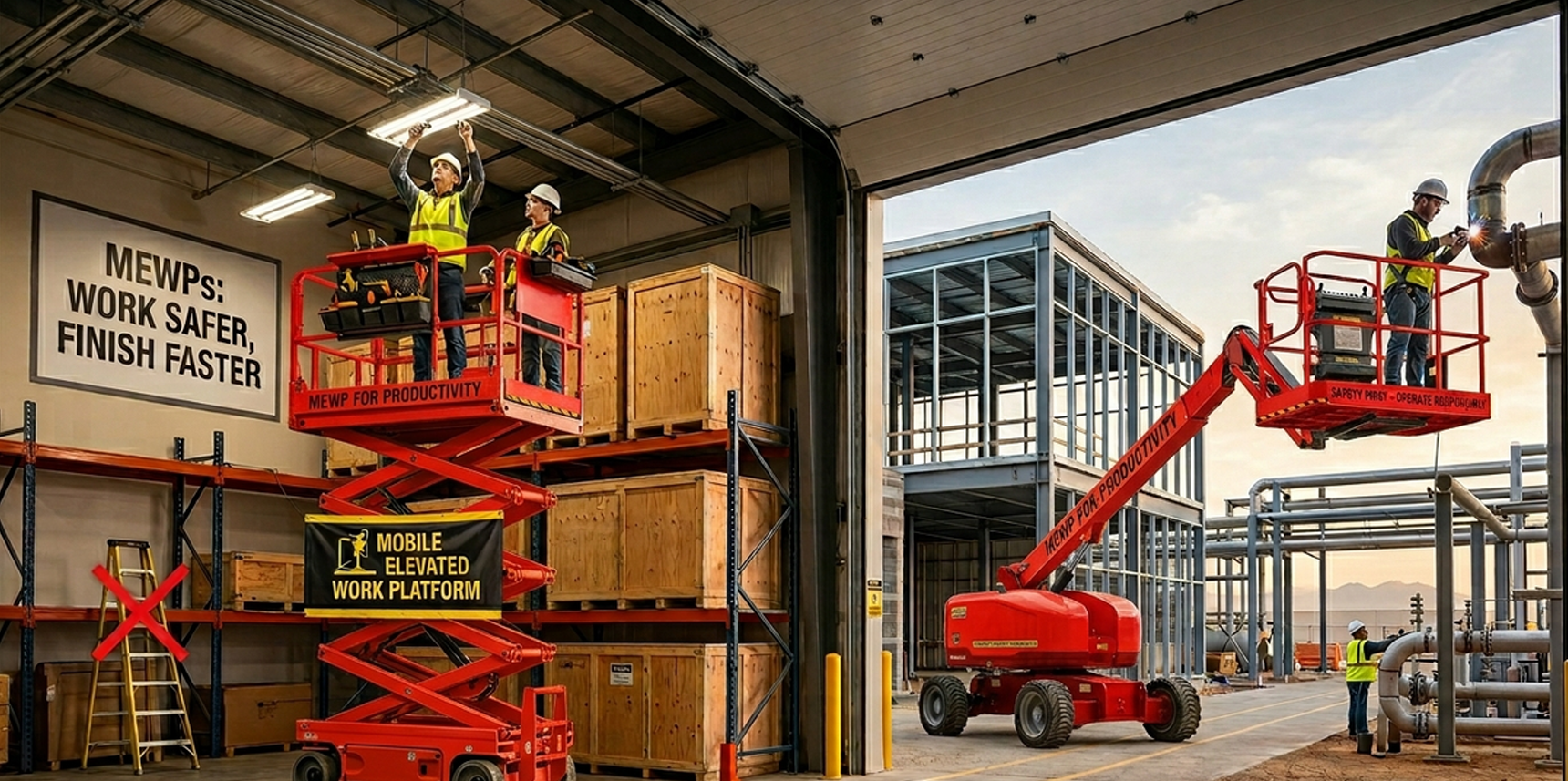
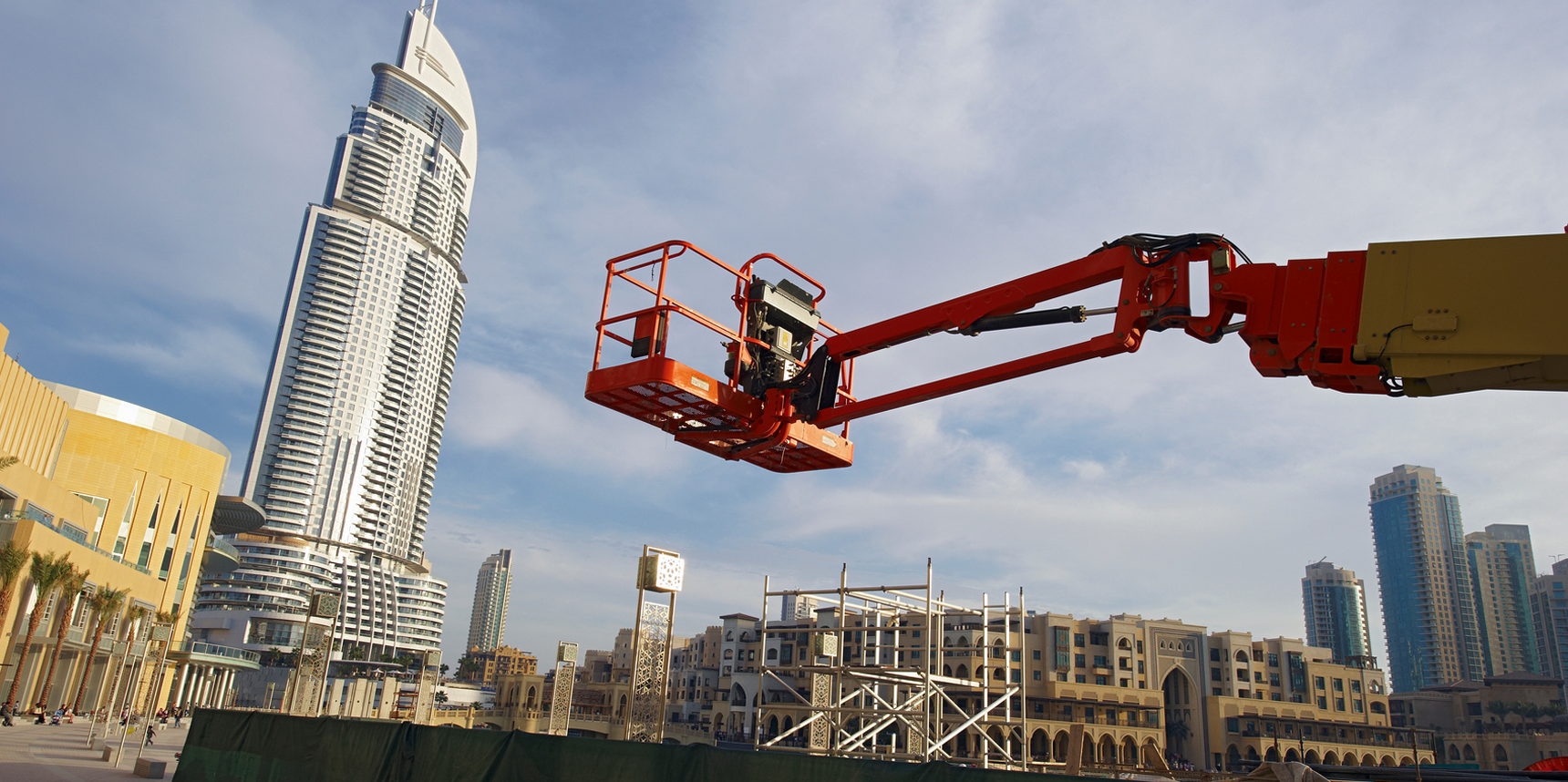
Some common types include scissor lifts, boom lifts, vertical mast lifts and trailer-mounted platforms. Each type is designed for specific work conditions. For example, scissor lifts are suitable for vertical lifting in warehouses and indoor maintenance, while boom lifts are useful when workers need to reach over obstacles or access difficult angles.
The main purpose of a MEWP is to provide safe, controlled and efficient access to elevated work areas.
Why Safety at Height Matters
Working at height always carries risk. Falls, unstable ladders, poor access, incorrect equipment and unsafe working practices can lead to serious injuries. In many worksites, using ladders for long-duration or heavy-duty work can be unsafe and inefficient.
MEWPs help reduce these risks by providing a secure platform with guardrails, stable support and proper controls. Workers can stand comfortably, carry tools and focus on the job without worrying about balance or unsafe movement.
For companies, improving work-at-height safety also helps reduce downtime, avoid accidents, protect workers and maintain professional standards.
1. Improved Worker Safety
The biggest advantage of a Mobile Elevated Work Platform is improved safety. Unlike ladders, which depend heavily on balance and manual positioning, MEWPs provide a stable platform for the worker.
Most MEWPs come with safety features such as guardrails, emergency stop buttons, platform controls, anti-slip flooring and overload protection. These features help protect workers while performing tasks at height.
A safe platform also allows workers to use both hands while working. This is especially important for electrical work, repairs, installation jobs and maintenance activities where tools are required.
When workers feel safe, they can perform their tasks more confidently and efficiently.
2. Better Productivity and Faster Completion
MEWPs help workers complete jobs faster. Setting up scaffolding can take time and manpower. Moving ladders repeatedly also slows down work. A mobile platform can be positioned quickly and adjusted to the required height within minutes.
For example, in a warehouse, workers can use a platform to carry out maintenance on lights, racks, signage or ceiling fixtures without constantly shifting ladders. In a construction site, boom lifts can help workers reach different areas quickly without rebuilding access structures.
This saves time and improves daily output. For companies handling multiple projects, faster work completion directly supports better productivity and cost control.
3. Access to Difficult Areas
Some work areas are difficult to reach using ladders or scaffolding. These may include high ceilings, building corners, overhead pipelines, exterior walls, signboards or areas above machinery.
MEWPs are designed to provide flexible access. Boom lifts can extend forward, upward and sideways, making them suitable for hard-to-reach areas. Scissor lifts provide stable vertical access for indoor and outdoor work. Compact platforms can move through narrow spaces and are useful in malls, hotels and warehouses.
This flexibility allows businesses to complete more types of jobs with fewer access challenges.
4. Reduced Manual Effort
Manual access methods require workers to climb, carry tools, shift equipment and constantly reposition themselves. This can be physically tiring and time-consuming. It may also increase the chances of mistakes or accidents.
MEWPs reduce manual effort by lifting workers and materials mechanically. Workers can carry tools and small equipment on the platform, reducing the need to climb up and down repeatedly.
This improves comfort, reduces fatigue and allows workers to focus better on the task. In the long run, reduced physical strain can also improve employee efficiency and morale.
5. Suitable for Multiple Industries
Mobile Elevated Work Platforms are used across many industries. In construction, they are used for installation, painting, cladding, electrical work and finishing jobs. In warehouses, they support rack maintenance, inventory handling, lighting work and safety inspections.
Facility management companies use MEWPs for cleaning, repairs, HVAC maintenance and signage work. Industrial plants use them for machinery inspection, pipework, cable installation and equipment servicing.
Because of their versatility, MEWPs are useful for companies that handle different types of maintenance and operational activities.
6. Professional Worksite Appearance
Using the right equipment creates a more professional work environment. Customers, contractors and project owners often judge a company by how safely and efficiently it operates. A worksite that uses proper access equipment looks more organized and reliable.
For commercial locations such as malls, hotels, offices and showrooms, professional equipment is especially important. It reduces disruption, improves safety and allows work to be completed neatly.
This is one reason many companies prefer MEWPs over traditional ladders for visible customer-facing locations.
7. Cost Efficiency Over Time
At first, some businesses may see MEWPs as an additional expense. However, when used regularly, they can help reduce overall operating costs.
They reduce the time required for setup, reduce dependency on large manpower, lower the chances of accidents and help complete work faster. In many cases, renting or owning the right MEWP can be more cost-effective than repeatedly arranging scaffolding or manual access systems.
For companies with regular maintenance needs, investing in MEWPs can offer long-term savings.
8. Better Tool and Material Handling
Many elevated jobs require tools, parts or materials. Carrying these items while climbing a ladder can be unsafe. A MEWP platform gives workers enough space to keep tools and small materials safely.
This improves work quality because workers can access what they need without repeatedly going down. It also reduces the risk of dropping tools from height, which can be dangerous for people working below.
Some platforms are designed with additional space and load capacity, making them suitable for more demanding applications.
9. Indoor and Outdoor Applications
MEWPs are available for both indoor and outdoor use. Electric models are popular indoors because they are quieter and produce no direct emissions. They are suitable for warehouses, malls, airports, factories and indoor maintenance areas.
Diesel or rough-terrain models are better suited for outdoor construction sites, uneven ground and heavy-duty applications. Choosing the right model depends on height requirement, surface condition, load capacity and working environment.
This wide range of options allows businesses to select equipment based on actual site needs.
10. Supports Compliance and Safety Standards
Many companies now follow strict health and safety procedures. Using proper access equipment supports compliance with worksite safety requirements and internal safety policies.
MEWPs can help companies reduce unsafe practices such as standing on unstable ladders, climbing on machines or using makeshift platforms. With proper operator training and safety checks, MEWPs support a safer and more controlled work process.
This is especially important for contractors working with large corporate clients, government projects or industrial facilities.
How to Choose the Right MEWP
Choosing the right Mobile Elevated Work Platform depends on several factors. Businesses should consider the working height, platform capacity, indoor or outdoor use, ground condition, movement area and type of work.
For straight vertical access, a scissor lift may be suitable. For work that requires reaching over obstacles, a boom lift may be better. For narrow indoor areas, a compact mast lift can be useful.
It is also important to check operator training, maintenance support, spare parts availability and after-sales service. The right equipment should be safe, reliable and easy to maintain.
Final Thoughts
Mobile Elevated Work Platforms have become an important part of modern worksites. They provide safer access to height, improve productivity, reduce manual effort and support professional working standards.
For businesses involved in construction, maintenance, warehousing, facility management or industrial operations, MEWPs are a practical solution that can improve both safety and efficiency.
Choosing the right platform can help workers complete tasks faster, reduce risks and create a more organized work environment. In today’s competitive market, safe and efficient operations are not optional. They are essential for long-term success.

100% Customer Satisfaction

Genuine Accessories

Quality Service
