

Car Care & Additives
- 14-Apr-2023
The History of Jeep: From Battlefields to Driveways
Jeep brand has been indelibly linked to freedom, adventure, authenticity and passion. The brand’s unwavering commitment to strength and meaningful engineering has helped forge an extraordinary, uncommon bond between the vehicles and their owners.
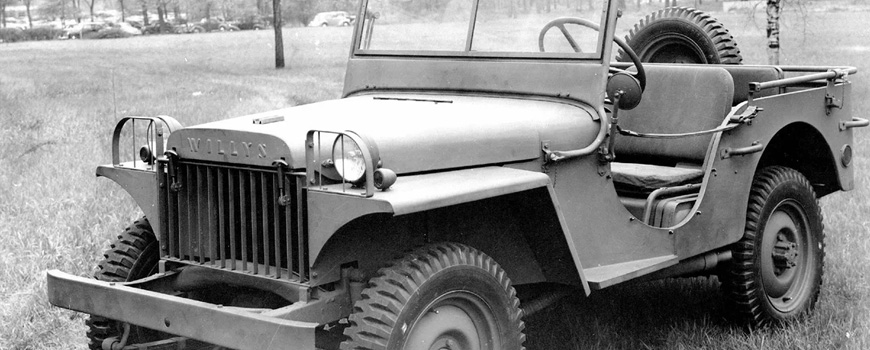
In the years 1940 during World War II, US Army had solicitated bids from 135 automakers with a requirement for a quarter ton “light reconnaissance vehicle” tailored to Army specifications.
Only three companies responded, Bantam, Willys, and Ford who collectively produced the first prototype vehicle called “Quad”. The design was completed in a record time of 75 days.
Eventually, Quad evolved to what is today known as Jeep and multiple other variations over the past 75 plus years.
Jeep’s early history is legendary. Its role in helping defeat the Axis powers during World War II is undeniable. On the battlefield, the Jeep was fast, nimble, and tough. It could handle nearly any terrain, and when it did get stuck, it was light enough for soldiers to lift it free. It towed anti-tank weapons that could be deployed quickly, and it could mount a machine gun for fighting infantry. The Jeep also served as an ambulance on the battlefield. It crossed rivers and lakes and carried allies to great distances.
After World War II, Willys took the Military model B and modified it, improving the headlights and seats, and giving it a tailgate to make it more relevant to the civilian population. In the following decades, Jeep retained a small but loyal civilian follower and remained largely reliant on its military contracts for volume and profitability.
String of companies acquired Jeep but were unable to convert their ideas and designs to cater to the population’s interests. For a brief period, Jeep as a brand had picked up some traction as it complemented the off-roading aspect with Chrysler’s offerings. Iacocca who was known for his unprecedented contribution to the automobile sector believed that Chrysler would profit from Jeep’s brand image and market. True to his words, as Jeep’s sales increased so did Chryslers. There were a few changes made to Jeep such as addition of Francois Castaing who upgraded the engineering of the Jeep giving it a completely new look in the market. Less than a decade later, due to miscalculated mergers and acquisitions Chrysler and Jeep filed for a bankruptcy, this period famously known as the “Jeep Curse”.
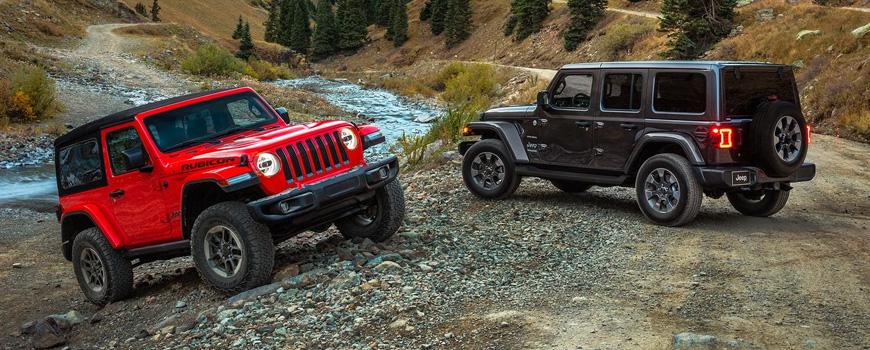
Then came the acquisition & merger of Chrysler with Fiat which brought in a whole range of opportunities for the company. Sergio Marchionne, CEO of Fiat Chrysler Automobiles, brought in a variety of changes to the line of the Jeep fleet. He improved the Compass and Patriot and invested in Grand Cherokee, improving its interior, electrical architecture, and powertrain. He killed the Jeep Commander, which he once described as “unfit for human consumption” and greenlighted replacement of the unloved Liberty with the revived Jeep Cherokee, first Jeep built on a Fiat platform. Under Fiat, Jeep added a subcompact to its line-up, the Renegade, and expanded Wrangler into a family of derivatives, including a pickup.
In 2012, the brand topped its previous best-ever year from 1999 by posting 701,626 shipments. In 2015, the brand finished with 1,237,583 shipments. From a few thousand units a year to several years of record sales, passing the million-vehicle mark each of the past years, from a manufacturer with four plants in one country to a global carmaker with ten plants in six countries, Jeep as a brand has made tremendous headway in the automotive sector.
More recently, Jeep started with progressive electrification of its line-up, which will drive the brand into the future, adding to the legendary off-road capability an urban, modern, and sophisticated spirit.

100% Customer Satisfaction

Genuine Accessories

Quality Service
